

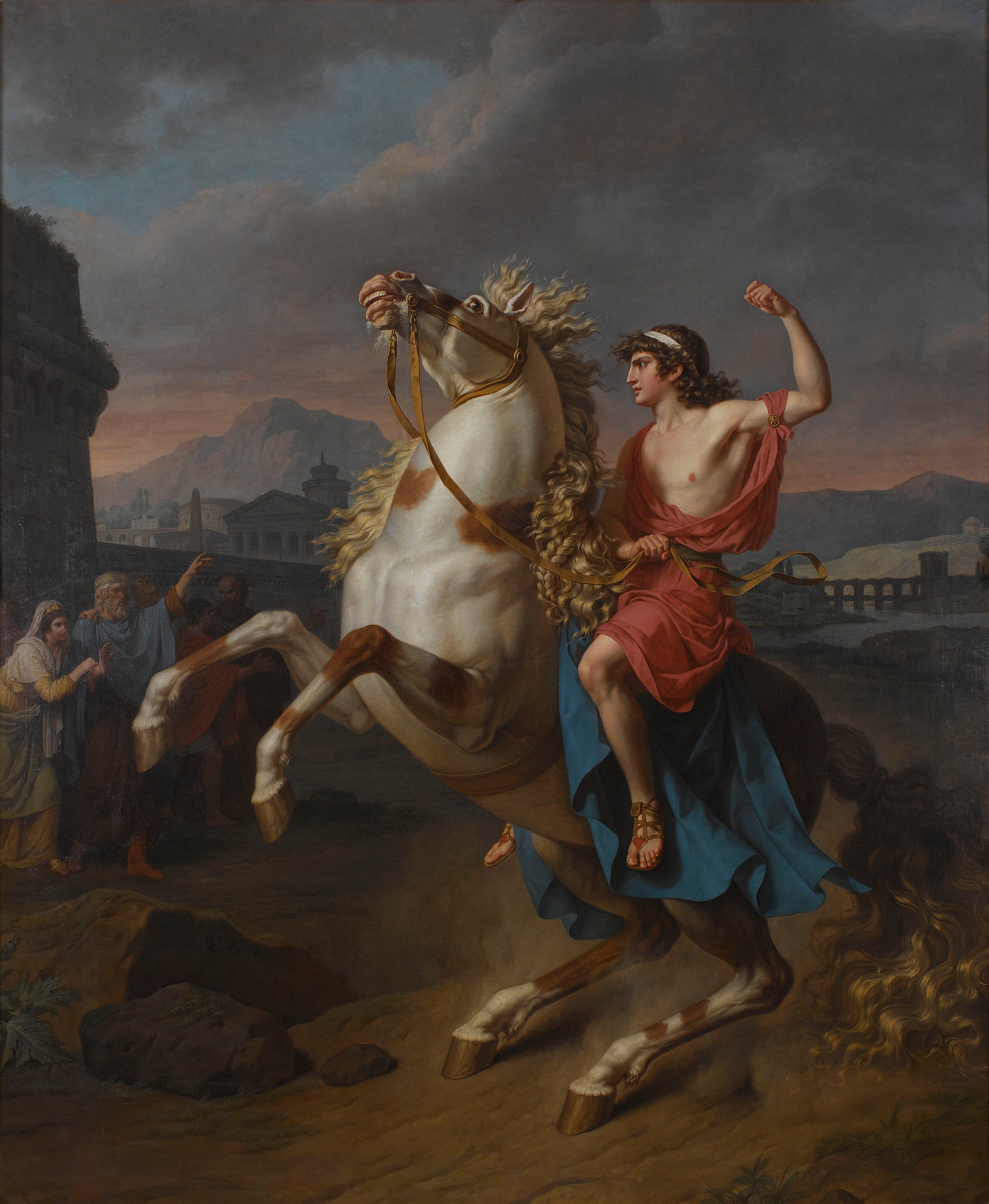
The King’s Story Reaches the Village
You sit down after a long morning tending the flocks on the rocky hills. Your goats have had their fill of the tender green grass of spring. Now it’s your turn for some warm wine and cheese. Yet there is something more that interests you as you approach the village campfire. Men are talking, their voices loud. For a moment, your hands move to your slingshot, but there is another type of excitement; you rush forward. They are talking about the new king; some of them served under the proud, old, one-eyed king and bear both the honor and scars from his victories. You see your father among them and your uncle too. You still remember the many winters you spent huddled with your siblings and asking your father about the time he fought against the Sacred Band of Thebes. The men who broke the Spartans at Leuctra and, in turn, were smashed under the iron phalanxes of Macedonia. Your uncle carried stories from the wild country to the north, the hard years he spent hunting the Thracians through their mountains, storming their hill-forts one bloody ridge at a time.
The men turn towards you; they know you want the reason for the excitement. Your father places a hand on your shoulder and smiles, his eyes almost watery. The new king wants revenge against the Persians. He promises to avenge the burning of temples more than a century and a half ago, to recover the honor that all Greece suffered at the hands of the invaders. Not only a punitive expedition, but also a promise of liberation for our cousins trapped under the cruel eastern satraps in Asia Minor. You know this is a moment where you have to decide. To be left behind and live as a shepherd, feeding off the aging tales of your family, or go out and carve your own warrior’s tale. You smile back at your father. There is really no choice. Your only fear, not coming back with such great stories as he had.
The Making of a Companion
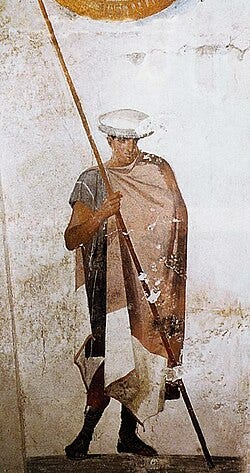
Your back burns, your arms feel numb, and your legs ache. Marching through dusty Macedonian roads, carrying pounds of grain, arms, and armor, takes its heavy toll on you. Days and nights pass, in one cycle of marching, pitching camps, drilling endlessly with hundreds of others, cooking, sleeping, and doing the exact same thing tomorrow.
You serve with men from your land, cousins, neighbors, friends. All together in one unit, raised from your region. Some have heard the stories; others come for the tradition of serving; many look for opportunities for wealth. One day, a few officials come into the camp; their bronze armor shining in the sun. You have never seen such wealth before; only the proud helmet of the first man is worth more than your village.
The eyes of your comrades go wild; they know this is a moment of great importance. You start to feel their anxiety; your heart sinks, and your stomach tightens. You curse having eaten so much porridge a few hours ago.
The officials are on foot, and an older man is close to them. Dressed in a white wool cloak. His beard and hair are clean and well kept. His eyes hold a deep gaze, and his expression is calm, an island of serenity amid a stormy sea.
The oldest in the group steps forward and orders you all to form up. Your commander echoes his voice, and as quickly as you can, you move into position.
You can feel the eyes of the officials dart from one man to the other; you now understand what sheep feel as the wolves circle them during a winter’s night.
Another yell breaks you out of the trance; “Pick up your spears, don your armor, move into battle formation!” You have drilled this hundreds of times. So many times under the blazing sun, cold rain, or battering winds. You do not falter. A forest of long spears stands now before the officials; you proudly hold yours, feeling like you could pierce a cloud.
“March forward!” You and the other 255 men move as one. Your feet shaking the earth, dust clouds gathering behind you, your hearts beating as one. A fearsome beast of men, wood and iron, a forest of death no foe could beat.
A few maneuvers follow: left, right, forward, and back. All done in perfection.
You see one of the officials approach the eldest; he smiles, and in his smile you see a long scar from temple to chin.
Silence replaces the shaking and marching. All of you stand together. And the seer gestures; a young acolyte brings forth a lamb.
Your heart sinks again; you know the gods will now decide the fate of you and your brother in arms. “Oh, Heracles, lord of strength, hear me; let them find me worthy,” You whisper to yourself.
The only sound is the death throes of the lamb, as its throat is slashed and its belly opened. The seer picks up the entrails and holds them towards the setting sun. An eternity passes; 256 men hold their breath. A pine cone falls from a close-by tree and nearly makes you jump.
His eyes are like fortresses, barred and gated. You can’t even begin to know what the seer thinks. Then he speaks with the voice of thunder. Silence, then uproar; the gods have found you all worthy.
The officials move forward; they stand in the center of the formation and ask you to turn towards them. We speak for the king himself! You are now no longer common men; you are now part of the king’s army. And not slaves or mercenaries, as other nations practice. You are now part of the king’s companions! Welcome, foot companions to the army of Macedon! May your victories be worthy in the eyes of the gods, and forever recited by men.
The officials move, clasping each man's shoulder, and in return the soldier bangs his spear against the ground.
You feel your eyes tear up as you see the officials approach you. He smiles when he sees your tears and clasps hard against your shoulder. The simple act of banging your spear against the ground feels like the proudest moment of your life. A sound you will never forget.
A man to your right gasps and then whispers; a few others join in. You follow their eyes. On a hill, a lone rider has been watching you and the men. His gleaming bronze armor catches a few reflections of the dying sun. His fair hair crowns a proud head, but you can’t make out more details from such distance. “Must be Apollo himself!” a young farmer to your left whispers.
The figure rides away as you and the rest break up formation and join together in singing praises to the gods.
The City of Myth
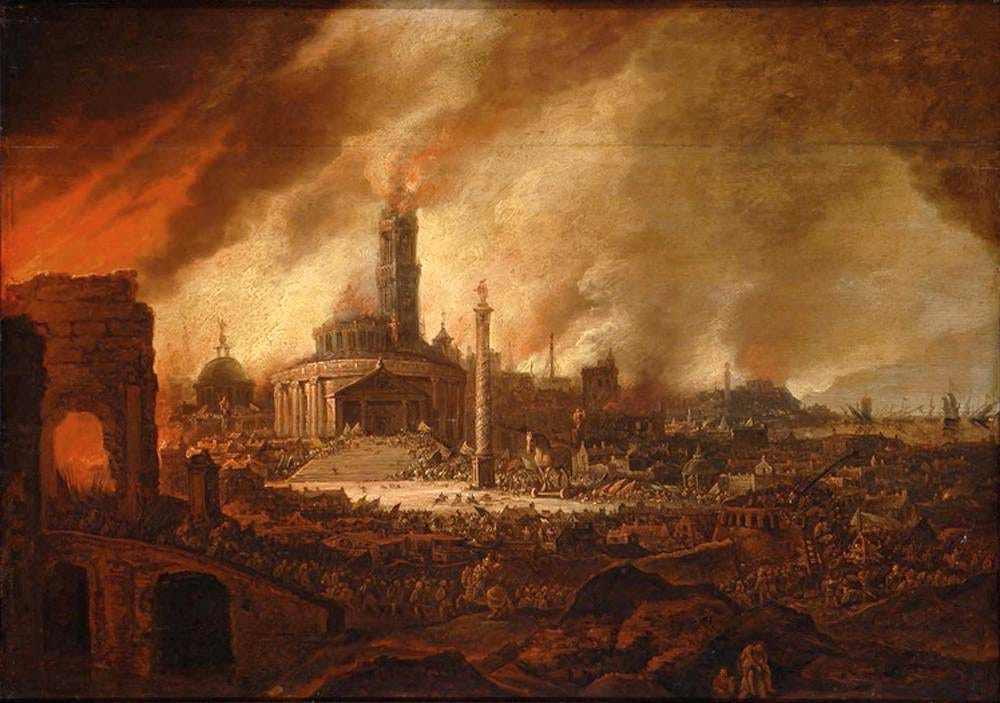
You thank the gods for a crossing beyond peaceful. The beautiful blue waters, in a close strait, offered no resistance, just like the Persian navy. Thirty-seven thousand of you cross unopposed. The feeling is almost intoxicating. A hero embarking on a sacred quest and about to face the monsters lurking beyond home.
The king has the attention of thousands of eyes as he aims his spear. His ship is approaching the shore fast. He does not throw it immediately, but waits for a moment. You do not breathe, you do not blink, you can only hope. A swift move, and the spear is flying, like a hawk. It arcs and falls, striking the land hard, burying itself deep. “This is a spear-won land!” he shouts and jumps ashore, armed and armored, the first to step into enemy land. Thousands of shouts answer his call. Your voice among them, a song of conquest with thirty-seven thousand voices rising behind it.
You follow the young golden king into the mythic city of Troy. Disappointment hits you, and you strain your neck trying to glimpse great towers and mighty palaces beyond what you see. There are none. This is a smaller town than expected. Ruins, Greek houses, and Persian administrative buildings huddle together in the place of heroes. The king has great plans for today, so he allows most of you to rest while he and his closest companions take part in sacred rites and honor Achilles.
You rush to make the best of the rest, as your comrades do, singing, dice, fires. Flatbread and cheese and wine, and the wine cut too thin, the way it always is. Your shoulders still remember the crossing. Under a gentle sun you eat well in the first hours of a war against the most powerful empire on earth.
The merrymaking grinds to a halt. Gasps echo in the newly found silence. You rub your eyes once, then again. An ancient hero, a being of legend, is walking among you. Achilles himself is gracing you with his presence. Some men fall to their knees. Others lift their palms, signaling respect. Realization hits thousands of men at the same time as the figure removes his ancient helmet to show himself as your king. For a moment there was no denying it. Time broke. The greatest of warriors walked the sands of Troy again.
The First Blood
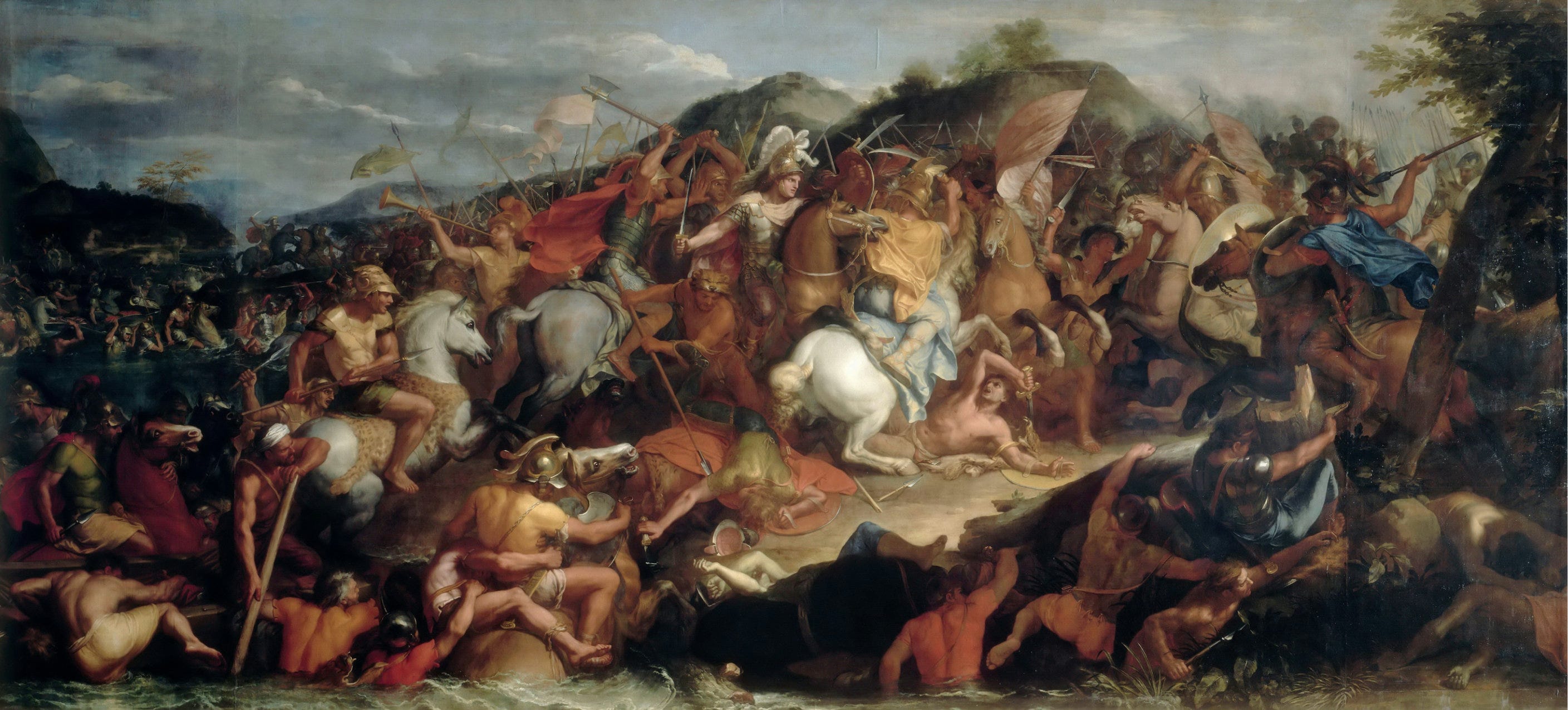
The march is cruel under the spring sun. Red poppies cover the fields as you and your comrades continue your journey east. There are still no signs of the enemy. For a moment, your mind wanders: are those fields just flowers, or are they omens of blood-soaked battlefields to come? You shake your head and push onwards. The sun is dropping towards the horizon. Then the halt order. You freeze. Far ahead in the column, the scouts are talking with the officials.
The enemy is close; the entire army and you start to march again, now the excitement mixing with fear. It feels like an eternity, every step taking twice as much time to hit the ground. The army feels like it’s slowly drifting forward, like a lazy river.
You hear the bronze trumpet ahead, and then close by a reply, followed by another far behind. The enemy is in sight. The Persians are waiting for us. The thought flashes through your mind. Are these the legendary warriors who burned Athens, fought the Spartans at Thermopylae, and sought to conquer the entire world?
You look to your left; a young farmer whom you befriended during training looks at you, his eyes sheepish and slightly frightened. You nod and smile to ease his feelings. A few men to the left and forward, your cousin marches proudly; he is larger than you and older too. You find some comfort in knowing he will be there too. You take another look; you are surrounded by men from your region, a few from your village, and some with whom you share blood.
No matter what happens, we will face it together; the idea brings peace to your mind, like a cool waterskin on a fiery summer day.
The march stops. A river in front of you and across the river, more horses than you ever thought could be assembled. The setting sun is glistening on their shields. Their fine tunics and shining helmets show off their wealth and power. And even more, the last rays of the sun catch a few reflections: gold bracelets and gold collars. A wall of horses and finely dressed men awaits a couple of stone throws away.
The order is given; there will be no waiting. Battle formations now. An iron-tipped and steel-hearted tide is crashing into them.
The trumpets echo, the dust gathers, and thousands march. Your heart begins to pound. Hard. Your vision narrows to the few meters in front of you. You gulp again and again. Your throat feels tight, as if a Persian was already trying to strangle you.
The first arrows sizzle above; you look up. The entire phalanx is holding the spears at the right angle, the middle and last rows forming a sort of canopy that shields your unit from the enemy projectiles. Your spear too forms part of this protection as you hasten your step to keep the rhythm. You are still in the middle, closer to the right edge than the center.
You wonder if you will end up in the front row at some point. You dread the thought of finding yourself there for a second and feel your stomach knot.
Water splashes as you hit the river, the fresh water calming your burning legs, calming your fiery nerves. There are other units in front of you, but they haven’t engaged the enemy yet.
Then the arrows and stones cease to rain. And you hear it. Hundreds of screams, the sounds of men and horses smashing into each other. Of iron and bronze. And a moment later, the first death screams, the first pain yells.
You look to your sides; no phalanx is fighting in the river. The dust clouds rising up in front of you tell the story. A cavalry unit charged in a diagonal line across the river. And pushed the enemy that was waiting for you and the rest of the infantry to cross.
A trumpet sounds. This time it is harder, more desperate, less melodious. Your commander yells, “The king is surrounded! March fast, hasten the step!”
You listen to the words, yet they make no sense. The king. He engaged the enemy first. He rode ahead of us. He stopped the arrows. He is the first to fight.
Now they are trying to kill him. You growl; men to your side yell. The entire companion infantry pushes forward hard. And a sea of spears falls upon the Persian horsemen, washing them away in droves.
You are not yet engaging the enemy, yet you begin to step over broken shields.
Then blood, dead men strewn across the field, horses limping away. Others agonizing.
You keep pushing, trying to keep your eyes forward, never looking down.
You see them riding to the side, the horse companion, the most noble of warriors from your land, the personal guard of the king. They look relieved at seeing the main army stand with them.
The horsemen, many of their rich tunics now slashed or bloodied, begin to pull back. Tentatively at first. And suddenly one of their leaders gallops away. His purple tunic flapping in the wind as he unceremoniously flees into the east.
That’s the signal they were waiting for, and the once proud wall of horses dissolves into the growing night. Only a scattering of weapons, shields, golden jewels, and dead bodies remain in their wake.
They never stood a chance.
The trumpet breaks the illusion. Once more into battle formation. Once more, get ready to face the enemy. You have been pushed to the third row now. Much closer to the killing field.
Your eyes deceive you. What are they doing here?
In front of you, there are no Persians. But a Greek hoplite formation. Standing against your king and his army. Against the true hegemon of all Greece. They do not budge or retreat, but hold their ground fiercely.
And so you march and push forward; your cousin is next to you now. Your spears are longer than theirs, and they are tired, surrounded, and far away from home.
Yet they still do not surrender. You see their shields gleaming in the sun. And you stab forward. You lurch with all your strength.
And you hit the target. But not where you wanted. Not a clean hit in the chest, but too low; the man you just hit looks around, dazed, panic setting in. You pull the spear back.
He grabs his belly. Black blood flows. His hands try to stop the bleeding.
He looks everywhere, his eyes begging for help, any help.
There is none. He disappears into the lines, pulling back to safety.
Your cousin looks at you. And nods. “He’ll be dead in a couple of days.”
You try not to listen, but to hold the spear again. And a last gathering of dust behind the enemy lines spells the end of this battle. And the beginning of the massacre.
The stubborn Greek hoplite, once a proud mercenary company for the Persians, is surrounded by all sides, pressed by the phalanx on the front and hammered again and again by the charging elite cavalry.
Their leaders shout, clearly in plain Greek. “We surrender; give us mercy!” Tens of thousands hold their breath in silence. Your eyes watch the battered but alive figure of your king. His helmet sliced, his scalp still bleeding.
“No quarter, no mercy for traitors,” he shouts back. Iron tips press them on all sides, iron swords cutting them down. Javelins and stones fall on them. Their screams and their gasps fill the air.
Less than half of them survive, and you see rows and rows of empty eyes on bloodied faces as they are led away, as prisoners, as traitors.
You still don’t understand. And look away. “Why would they serve our enemies? Why wouldn’t they join the rest of Greece and Macedon on our noble mission?”
The questions still echo in your mind in the camp that night. The songs and feasting quiet them for a moment, but in your tent, once silence rules again, they return, again and again, like a charging line of cavalry.
You can only hope; answers lie deeper to the east.
For now, one thing is certain. This story will live on lyres and harps for many years to come.
The Story You Never Chose
Storytelling builds empires and buries them too.
There is not enough gold for a king to pay a man to charge into a wall of spears. A good story can make him volunteer for the front rank.
A powerful story needs to do two things at the same time… Draw a line. One side for us. And the other for them.
The line needs a ritual to be meaningful. An initiation that shifts identity.
Having the new recruits bang their spears and receive official recognition. Donning the armor of an ancient mythic hero. They all change how a person sees themselves and how the world sees them.
Alexander understood the power of storytelling, and he used it to conquer half of the known world, all before the age of twenty-five. The tactics and strategies were how he won the battles; the stories he told were how he got the men to follow him into war.
The story’s foundations were laid by his father and, a century and a half earlier, by Persian aggression. He took the pieces in front of every Greek and Macedonian, and shaped them into a coherent tale that could be repeated ten thousand times without losing a single word.
That’s how thousands of young farmers and shepherds took up arms and submitted themselves to grueling marches, drills, and battles. And while they were inside that story, they could not hear the other side.
Even when they were speaking their own tongue, begging for mercy. A traitor is an enemy who used to be us.
There were no questions of hatred. There was only a question of belonging.
The shepherd never knew he was living inside a story. Most days, neither do you.
In the end, you are either handed a story to follow, or you tell your own.
"A traitor is an enemy who used to be us" exposes what the category is actually doing underneath the battlefield drama. The hoplites were punished for proving the line was drawn in the wrong place, that belonging was never really about blood or homeland at all, just about which story someone happened to be standing inside when the trumpets sounded. Killing them wasn't really about betrayal. It was about not letting that inconvenient proof survive to be examined too closely.